Menu

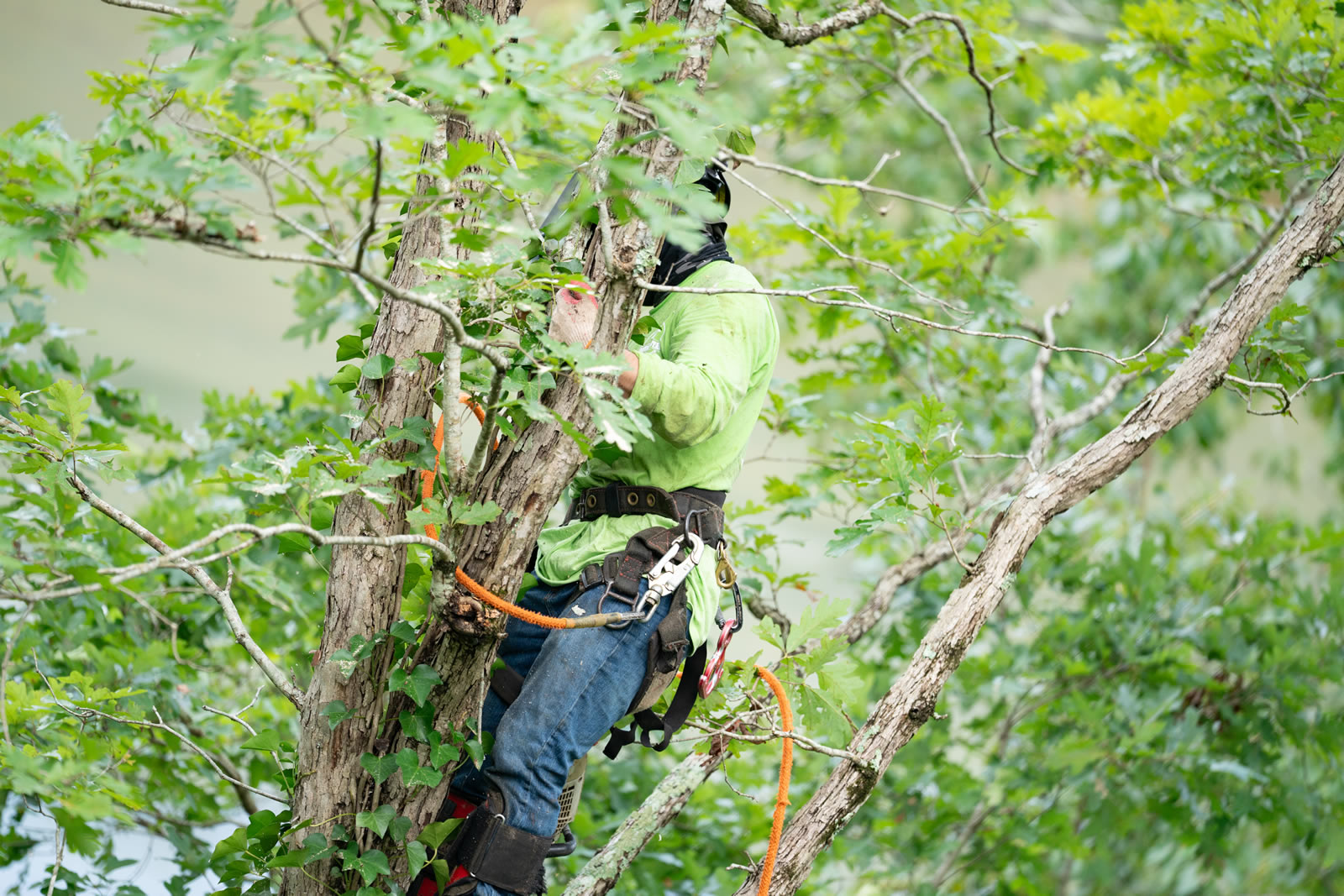
Trees are a valuable addition to any landscape. However, fallen branches or entire trees cause millions of dollars…

Trees are a valuable addition to any landscape. However, fallen branches or entire trees cause millions of dollars in property damage. If you have big trees in your backyard, taking a proactive approach toward regular inspection and maintenance can help you recognize early signs of potentially hazardous trees. The last thing you want is a limb falling on your roof or surrounding structures and causing costly damage. At Southern Star Tree, we believe that knowing what to look for can help property owners address the problem early. Let’s delve into the five telltale signs of a potentially hazardous branch to ensure you make informed decisions.
One of the most obvious indicators that a branch is structurally compromised is visible cracks. If you detect cracks running along the length of a branch or appearing where it connects to the trunk, act quickly to mitigate hazardous situations. Even a small split can worsen over time, especially during extreme weather conditions when the branch moves constantly. A cracked branch above your roof, garage, or another structure should be addressed quickly before it wreaks havoc. A tree care company in Atlanta, GA can dispatch a certified arborist to inspect the damage and recommend effective solutions to protect your investment.
Seasonal changes can cause defoliation. This is a common occurrence during fall, when vegetation prepares for the cold season. However, a branch that has no leaves when it should be producing them may be dead or dying. Dead branches lose moisture and structural integrity, becoming increasingly brittle. During strong winds, heavy rain, or snowfall, compromised limbs can snap without much warning and cause property damage. Regularly look for branches that are noticeably different from healthy ones, especially if they have no buds, appear dry, or the bark is peeling. When you allow these potentially hazardous limbs to extend over your roof, they pose unnecessary risks that should be evaluated.
Another sign you need to call a tree service provider for an inspection is changes in the position of a branch. Over time, these limbs can become weakened or partially separated from the tree. If you detect a branch that suddenly leans, droops, or hangs lower than normal, call a professional tree service provider quickly. Unusual branch angles are a common occurrence after storms, when strong winds place stress on the connection between the trunk and limb. Don’t attempt to pull large branches down yourself, as the weight can make removal unpredictable and dangerous. Professional tree trimming may be the best course of action to protect your home and preserve overall health.
Bark protects the delicate internal structure of a tree. With that said, identifying areas where the bark is falling is a red flag you shouldn’t ignore before it is too late. Look for soft or hollow sections, fungal growth, cavities, and decayed wood. Additionally, insects can easily create openings or tunnels that weaken the branch internally. Although the danger is not always obvious, delaying professional intervention can lead to further deterioration or even premature tree removal in the case of severe decay. A tree care company can help you assess the extent of the damage and recommend solutions to keep your tree in top condition and your home safe.
While it is natural for heavy branches to move when the wind blows, unusual or excessive movement can be a warning sign. If a branch over your roof is swaying more than the surrounding limbs, its connection to the trunk may be compromised. You may also notice cracking or unusual bending during adverse weather conditions. A weakened limb can become more unstable with repeated movement, hence the need to take these movements seriously rather than wait for the next storm to test its strength.
If you notice a potentially hazardous branch over your roof, contact Southern Star Tree to book an appointment with our experts rather than trying to handle tree trimming yourself. We provide tailored preventive care to make a significant difference when the next storm arrives.

.webp)

